


The middle of your one-line.
Feeders leave the substation, run through switching and protection, and land on transformers. This page covers the span in orange — and every device on it has to coordinate with what’s on either side.
Illustrative only. Equipment configurations vary by application, utility requirements, and project design. This diagram is intended to show how the equipment typically fits within a power system.
Five ways to switch and protect a feeder.
Which device belongs where depends on whether the line runs overhead or underground, how it needs to sectionalize, and what has to happen when a fault hits.
Metal-clad switchgear
Vacuum breakers in compartmentalized lineups — full protection and control where feeders are critical and outages are expensive. Configured to your scheme and the room that holds it.
Load interrupter switches
The simpler alternative to a breaker lineup — a load-break switch and fuses protecting a transformer or feeder. Smaller, economical, and often all a single substation needs.
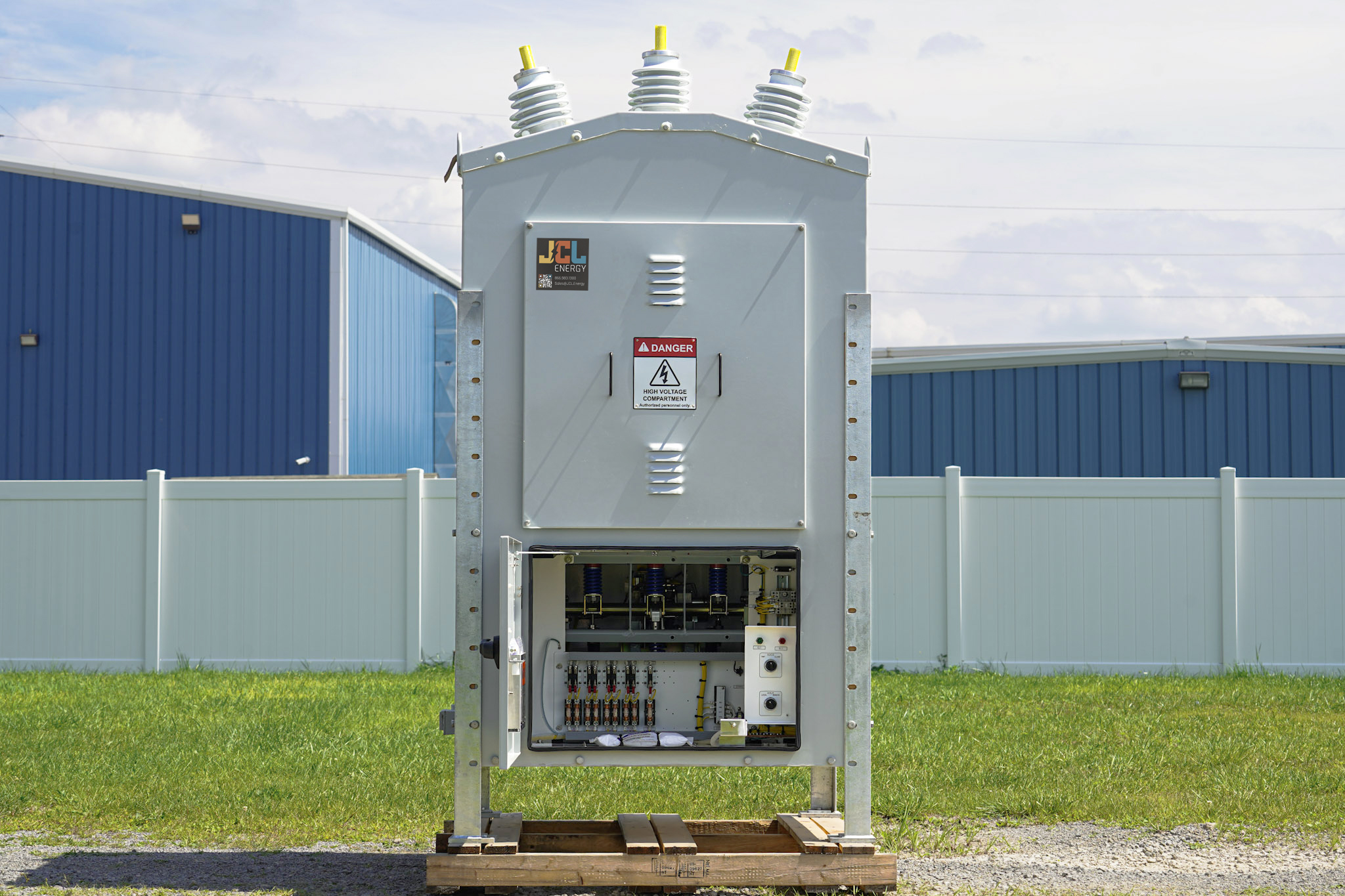
Pad-mounted switchgear
Loop, sectionalize, and tap underground feeders from a locked cabinet on a pad — no vault, no fence, tamper-resistant in public spaces.
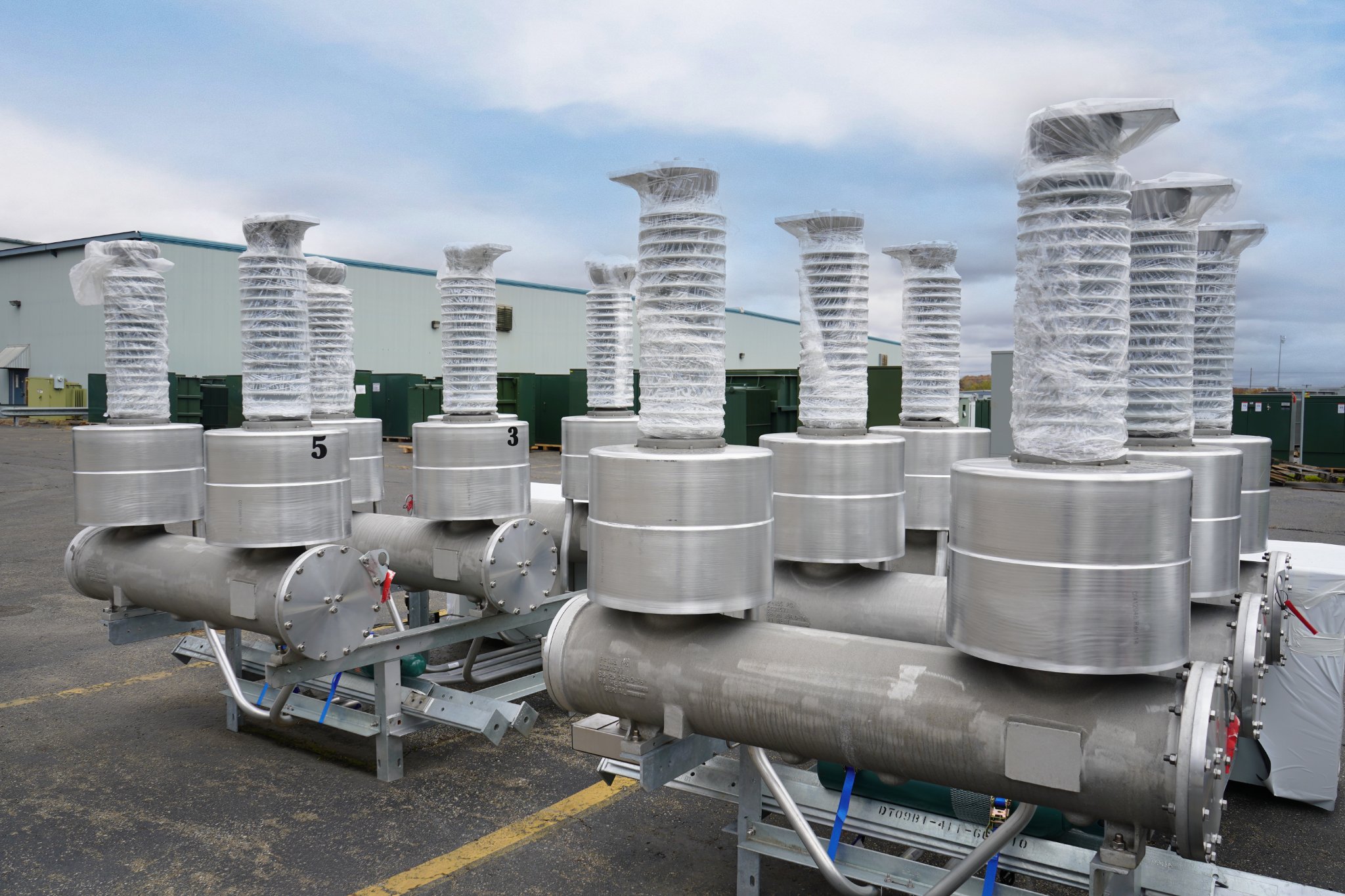
Reclosers
Clear temporary faults and restore the line without a truck roll. Controls coordinate with substation relaying upstream and fuses downstream.
Vacuum circuit breakers
The breakers inside the lineup — new, and replacements for gear already in service. When one breaker is the problem, you don’t have to buy the row.
Plus the parts
Bushings, elbows, fuses, arresters, and gauges — the components that finish the job, stocked to keep gear and transformers in service.
Specified to work with what you have.
Medium-voltage gear never works alone. Before we quote a device, we check it against the system it’s joining.
Device curves set to trip in order — branch first, feeder next, substation last.
Interrupting and momentary ratings checked against the impedance actually feeding the bus.
Interconnect and metering requirements built into the spec, not discovered at inspection.
Extensions matched to your bus rating and phasing — and to the manufacturer where it matters.